
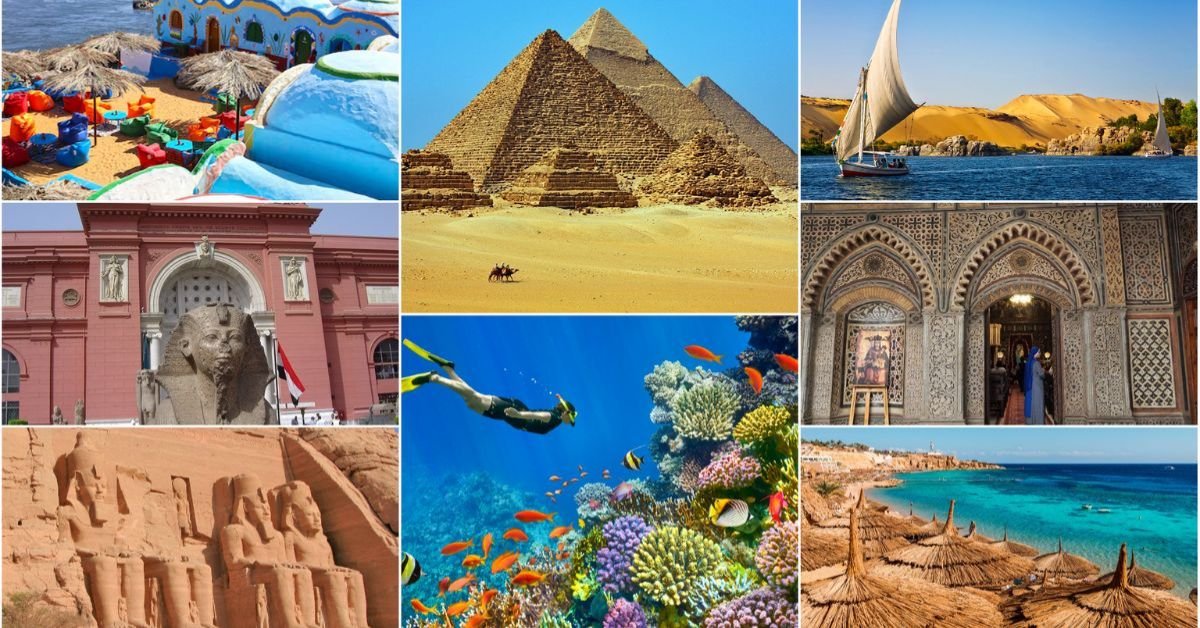
Egypt travel destinations offer one of the most powerful travel experiences in the world. Few countries combine ancient civilisations, monumental architecture, desert landscapes, bustling cities, and turquoise coastlines in one compact region. From the Great Pyramids to coral reefs in the Red Sea, Egypt travel destinations provide diversity that appeals to history lovers, adventure seekers, photographers, families, and luxury travellers alike.
Planning Egypt travel destinations requires understanding the country’s geography and rhythm. Cairo introduces you to iconic wonders and urban intensity. Upper Egypt along the Nile immerses you in temple history. The Red Sea coast delivers beach escapes and diving. Desert oases reveal silence and dramatic scenery. This complete guide covers the best Egypt travel destinations, travel planning advice, seasonal recommendations, budgeting insights, and suggested itineraries to help you build a balanced journey.
Cairo: The Cultural Core of Egypt
Cairo is the gateway to most Egypt travel destinations. As the capital city, it blends ancient monuments with modern life, creating a dynamic and unforgettable introduction to the country. The energy can feel overwhelming at first, but Cairo rewards visitors with unmatched historical richness.
Cairo
Cairo serves as Egypt’s political, cultural, and economic centre. It is a city where medieval mosques stand beside busy streets and historic districts remain alive with daily activity.
Pyramids of Giza
The Pyramids of Giza define Egypt travel destinations globally. Built more than 4,500 years ago, these colossal structures remain one of the Seven Wonders of the Ancient World still standing. Visiting at sunrise or sunset offers better lighting and fewer crowds.
Great Sphinx of Giza
The Great Sphinx, carved from limestone, stands guard near the pyramids. Its human head and lion’s body symbolise strength and wisdom.
Egyptian Museum
The Egyptian Museum houses thousands of artefacts, including the golden mask of Tutankhamun. It provides crucial context for understanding Egypt travel destinations beyond the monuments themselves.
Khan el-Khalili
Khan el-Khalili offers a traditional marketplace experience filled with spices, jewellery, handicrafts, and local cafés. It is ideal for cultural immersion and souvenir shopping.
Giza: The Iconic Monument Zone
Giza sits just outside Cairo and forms one of the most famous Egypt travel destinations in the world. The area centres around the ancient pyramid complex, offering visitors a direct connection to Old Kingdom engineering.
Beyond the main pyramids, travellers can explore smaller tombs, panoramic desert viewpoints, and camel rides around the plateau. Many visitors combine Giza with Saqqara and Memphis for a deeper understanding of early Egyptian civilisation.
Luxor: The Open-Air Museum of the Nile
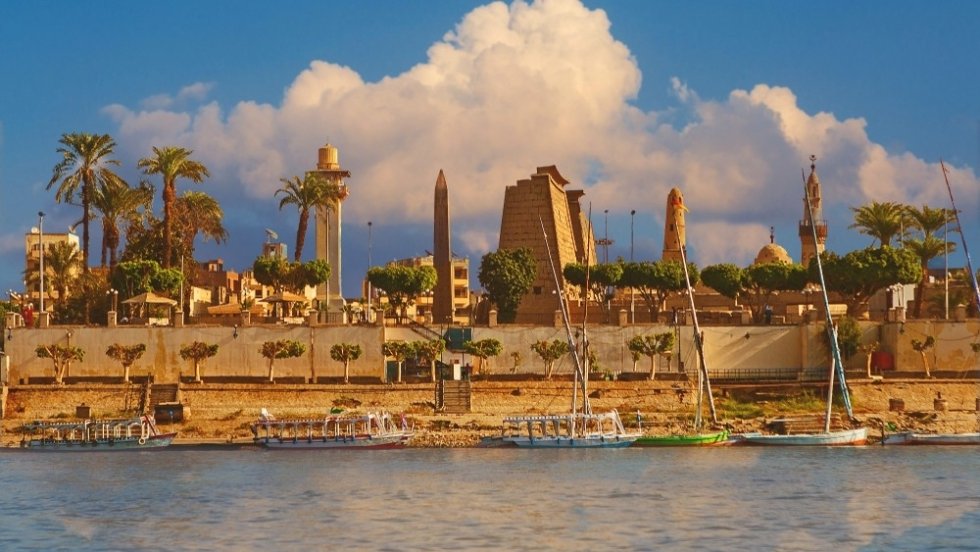
Luxor stands as one of the most historically concentrated Egypt travel destinations. Often referred to as the world’s greatest open-air museum, this city preserves the grandeur of ancient Thebes across both banks of the Nile. Temples, tombs, colossal statues, and sacred pathways are not hidden behind museum glass here they rise directly from the earth. For travellers seeking depth, scale, and authenticity, Luxor defines Upper Egypt.
Luxor
Luxor sits on the east bank of the Nile and serves as the modern successor to ancient Thebes, once the capital of Egypt during the New Kingdom. Compared to Cairo, Luxor feels calmer and more manageable. The city is compact, and many key sites are within short driving distance of each other.
The Nile divides Luxor into two symbolic halves. The east bank traditionally represented life and daily activity, while the west bank was associated with the afterlife and burial sites. This symbolic geography still shapes how travellers explore Luxor today.
Karnak Temple
Karnak Temple is one of the most extraordinary religious complexes ever constructed. Built and expanded over nearly 2,000 years, it reflects the power and devotion of multiple pharaohs.
The Great Hypostyle Hall remains the highlight, with 134 massive sandstone columns rising dramatically overhead. Walking through this forest of stone gives a sense of the scale ancient architects achieved without modern tools. The sacred lake within the complex once played a central role in purification rituals.
Karnak is best visited early in the morning to avoid crowds and intense heat. Allow at least two hours to fully appreciate its size and historical significance.
Luxor Temple
Luxor Temple sits closer to the city centre and differs in character from Karnak. It was primarily dedicated to rejuvenating kingship rather than worshipping a specific god.
What makes Luxor Temple especially striking is its evening atmosphere. When illuminated after sunset, the columns and statues create a dramatic setting that feels almost theatrical. The avenue of sphinxes connecting Luxor Temple to Karnak highlights the ceremonial importance of the site.
Because it is centrally located, Luxor Temple is easy to combine with local dining or evening strolls along the Nile Corniche.
Valley of the Kings
Across the Nile on the west bank lies the Valley of the Kings, one of the most important archaeological zones in the world. Hidden within desert hills are more than 60 royal tombs carved deep into the rock.
The tomb of Tutankhamun is among the most famous, but several other tombs feature more extensive wall paintings and larger chambers. These vivid carvings depict scenes from the afterlife, offering insight into ancient Egyptian beliefs about death and rebirth.
Visitors should pace themselves, as temperatures on the west bank can rise quickly. Hiring a knowledgeable guide enhances understanding of the symbolism and historical context within each tomb.
Additional West Bank Highlights
Beyond the Valley of the Kings, Luxor’s west bank includes several remarkable sites:
- Temple of Hatshepsut – A striking mortuary temple built into limestone cliffs.
- Colossi of Memnon – Two massive seated statues that once guarded a temple complex.
- Valley of the Queens – Burial site of royal women, including the beautifully decorated tomb of Queen Nefertari.
These sites deepen the experience and provide broader perspective on royal life and power during the New Kingdom period.
Why Luxor Defines Upper Egypt Travel
Luxor delivers an unmatched concentration of monumental architecture and royal burial sites within a relatively small area. Unlike other Egypt travel destinations that focus on a single landmark, Luxor offers layered exploration across multiple eras and rulers.
Travellers often spend two to three full days in Luxor to cover both banks comfortably. Pairing temple visits with a sunrise hot air balloon ride over the west bank adds a spectacular aerial perspective of the Nile Valley.
Luxor remains essential for anyone serious about understanding Egypt’s ancient civilisation. Its temples and tombs are not simply attractions they are enduring records of one of the world’s greatest cultures.
Aswan: Tranquil Beauty Along the Nile
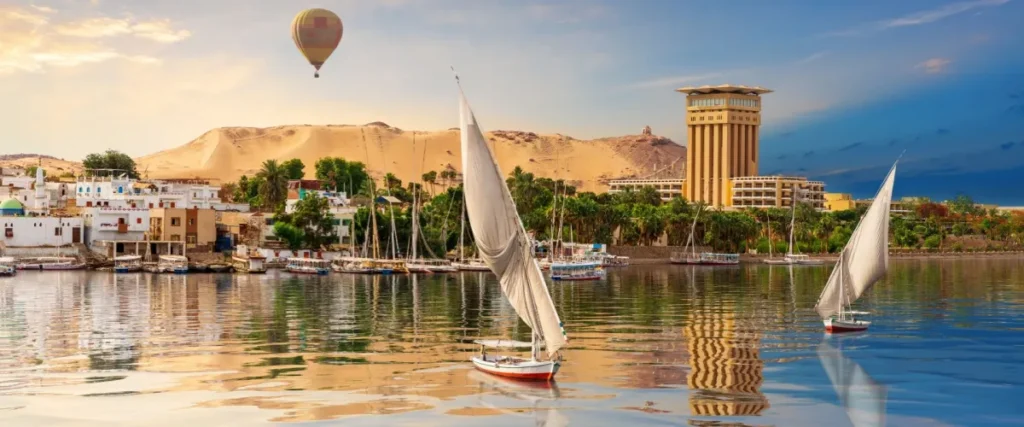
Aswan offers a calmer and more relaxed rhythm compared to Cairo and Luxor. Set against a backdrop of golden desert hills and granite boulders rising from the Nile, it is one of the most scenic Egypt travel destinations. Traditional felucca sailboats drift slowly across the water, creating postcard-worthy views at sunset. For many travellers, Aswan provides a welcome pause after days of intense temple exploration.
Aswan
Aswan’s slower pace makes it ideal for unwinding while still experiencing significant historical landmarks. The city feels more intimate than Cairo and less crowded than Luxor. Walking along the Nile Corniche in the evening or visiting local Nubian villages introduces travellers to a different cultural atmosphere.
Aswan also serves as the starting or ending point for many Nile cruises, making it an essential stop within Egypt travel destinations itineraries. The surrounding desert landscape adds contrast to the fertile Nile banks, highlighting how crucial the river has always been to Egyptian civilisation.
Philae Temple
Philae Temple sits on Agilkia Island and is dedicated to the goddess Isis. Reaching the temple requires a short motorboat ride, which enhances the sense of arrival. Surrounded by water, the temple complex feels peaceful and slightly removed from the mainland.
The detailed carvings and hieroglyphs remain remarkably preserved. Visiting in the late afternoon offers softer lighting and fewer tour groups. The island setting makes Philae one of the most photogenic Egypt travel destinations in Upper Egypt.
Abu Simbel Temples
Located approximately three hours south of Aswan, the Abu Simbel Temples are among the most dramatic monuments in Egypt. Massive seated statues of Ramses II are carved directly into a sandstone cliff, creating an imposing façade that leaves a strong impression.
In the 1960s, the temples were carefully relocated to higher ground to prevent flooding after the construction of the Aswan High Dam. This international preservation effort remains one of the most ambitious archaeological rescue projects ever completed.
Abu Simbel is often visited as a day trip from Aswan, either by road convoy or short flight. The scale and engineering precision make it a highlight among Egypt travel destinations.
Aswan combines natural beauty with ancient heritage, offering both relaxation and cultural depth. Whether sailing on a felucca, visiting temples, or boarding a Nile cruise, Aswan delivers a serene yet meaningful travel experience.
Alexandria: Mediterranean Elegance
Alexandria introduces a completely different atmosphere compared to Upper Egypt. Positioned along the Mediterranean coast, it blends Greco-Roman heritage with coastal charm. Among Egypt travel destinations, Alexandria feels more European in character, shaped by centuries of cultural exchange.
Alexandria
Founded by Alexander the Great in 331 BCE, Alexandria quickly became a centre of learning and commerce in the ancient world. Today, it offers a cooler climate, sea breezes, and a more relaxed pace compared to Cairo.
The city’s waterfront promenade provides space for evening walks, while seafood restaurants reflect its coastal identity. Alexandria adds historical variety beyond pharaonic monuments, expanding the narrative of Egypt travel destinations.
Bibliotheca Alexandrina
The Bibliotheca Alexandrina is a modern cultural landmark built to honour the legacy of the ancient Library of Alexandria. The striking circular design symbolises the rising sun of knowledge.
Inside, visitors find libraries, museums, exhibition halls, and cultural events. It stands as a bridge between Egypt’s ancient intellectual heritage and contemporary scholarship.
Citadel of Qaitbay
The Citadel of Qaitbay was constructed in the 15th century on the site of the ancient Lighthouse of Alexandria, once one of the Seven Wonders of the Ancient World. The fortress overlooks the Mediterranean and provides sweeping coastal views.
Exploring the citadel reveals layers of Islamic and maritime history that differ from temple complexes found elsewhere in Egypt travel destinations.
Red Sea Coast: Marine Paradise
The Red Sea coastline ranks among the most popular Egypt travel destinations for beach lovers, divers, and travellers seeking relaxation after intense historical exploration. Warm, crystal-clear waters and vibrant coral reefs make this region attractive throughout the year. Unlike the desert temples of Upper Egypt, the Red Sea offers colour, marine life, and a completely different pace.
Hurghada
Hurghada has developed into one of the leading resort hubs along the Red Sea. Once a small fishing village, it now features a wide range of beachfront hotels, private resorts, and organised diving centres.
The calm waters and sandy beaches make Hurghada especially suitable for families. Snorkelling excursions, boat trips to nearby islands, and beginner diving courses are widely available. For travellers new to scuba diving, Hurghada provides accessible entry points into Egypt travel destinations focused on marine life.
Evenings in Hurghada are relaxed, with seaside promenades, cafés, and resort entertainment options adding to the experience.
Sharm El Sheikh
Sharm El Sheikh, located on the southern tip of the Sinai Peninsula, is known globally for its diving sites and upscale resorts. The underwater biodiversity here is exceptional, with colourful reefs and clear visibility attracting divers from around the world.
Sites such as Ras Mohammed National Park offer dramatic coral walls and abundant marine species. For advanced divers, deeper wreck dives and offshore reefs provide thrilling exploration opportunities.
Beyond diving, Sharm El Sheikh offers luxury accommodation, spa retreats, and desert excursions into the Sinai mountains. This makes it one of the most versatile Egypt travel destinations for travellers who want both relaxation and adventure.
Dahab
Dahab presents a quieter and more laid-back alternative to larger resort cities. Popular with backpackers, digital nomads, and experienced divers, Dahab maintains a relaxed village atmosphere.
The famous Blue Hole dive site attracts skilled divers, while shoreline cafés and simple guesthouses create a more affordable travel experience. Windsurfing and kitesurfing are also popular due to consistent coastal breezes.
Dahab appeals to travellers seeking authenticity without sacrificing access to world-class marine environments. It adds diversity to Egypt travel destinations along the Red Sea.
The Red Sea region offers a perfect balance after exploring pyramids and temples. Combining historical cities with coastal relaxation creates a well-rounded itinerary.
Siwa Oasis: Desert Escape
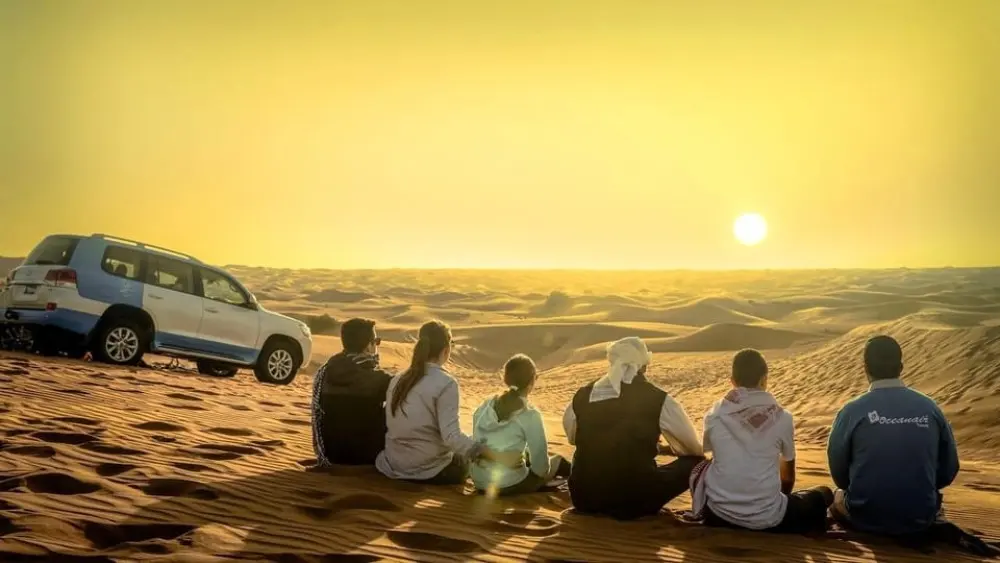
Siwa Oasis stands among the most unique and secluded Egypt travel destinations. Located near the Libyan border in Egypt’s Western Desert, Siwa feels worlds away from the Nile Valley. Palm groves, natural springs, salt lakes, and sand dunes shape its distinctive landscape.
Siwa Oasis
Siwa is known for its isolation and strong local identity. The community has preserved its own language and traditions, which differ slightly from mainstream Egyptian culture.
Visitors come to Siwa for tranquillity and natural beauty. Highlights include:
- Cleopatra’s Spring, a natural swimming pool
- Shali Fortress, a historic mud-brick settlement
- Salt lakes with high mineral content
- Desert safaris across the Great Sand Sea
Sunset views from elevated desert viewpoints are particularly striking. The quiet environment makes Siwa ideal for reflection and photography.
Siwa Oasis suits travellers seeking peaceful landscapes and cultural authenticity. It offers a dramatic contrast to bustling Cairo and coastal resorts, reinforcing the incredible diversity found across Egypt travel destinations.
Nile River Cruises: Timeless Journey
A Nile cruise remains one of the most rewarding ways to experience Egypt travel destinations. Cruises typically operate between Luxor and Aswan.
Travellers enjoy:
- Temple visits along the river
- Scenic sailing
- Onboard dining
- Guided excursions
This slower travel style allows deeper appreciation of Egypt’s landscapes and archaeological treasures.
Best Time to Visit Egypt
Choosing the right season enhances Egypt travel destinations significantly.
October to April
- Cooler temperatures
- Ideal for sightseeing
- Peak tourism season
May to September
- Hot conditions
- Lower hotel rates
- Fewer crowds
The Red Sea remains suitable year-round.
Safety and Travel Advice
Egypt travel destinations are generally safe when travellers follow practical precautions:
- Use licensed guides
- Arrange trusted transport
- Respect local customs
- Stay hydrated
- Purchase travel insurance
Tourist areas are well monitored and accustomed to international visitors.
Suggested 10-Day Egypt Itinerary
Day 1–3: Cairo and Giza
Day 4–6: Luxor and Valley of the Kings
Day 7–8: Aswan and Abu Simbel
Day 9–10: Red Sea relaxation
This structure balances culture, history, and rest.
Budget Planning
Egypt travel destinations offer range:
- Budget: Guesthouses and local transport
- Mid-range: Boutique hotels and guided tours
- Luxury: Five-star Nile cruises and resorts
Costs remain competitive compared to many global destinations.
Must Read:
- Ula Saba Safari Lodge Africa Travel Resources
- Do I Need a Visa To Travel To Brazil?
- Where to Travel in Africa For Safari?
Final Thoughts:
Egypt travel destinations offer unmatched historical depth and geographic diversity. From pyramids and temples to coral reefs and desert oases, the country delivers a complete travel experience within one journey.
Proper planning ensures smooth logistics, seasonal comfort, and a balanced itinerary. Whether exploring Cairo’s monuments, cruising the Nile, diving in the Red Sea, or watching sunset over desert dunes, Egypt travel destinations provide memories that last a lifetime.